Showing posts with label Conceptual Force 2035. Show all posts

Sunday, May 8, 2022

Everyone is recce, everyone is strike: an organisation for a small but tough British Army


As I’ve made hopefully clear on Twitter in several different occasions, I am convinced the Integrated Review was very good. The Defence Command Paper had a lot of good things about it too, although it is clear that some things would need more funding to truly get moving according to stated ambitions.

Future Soldier is the one document that is not just disappointing but flat out concerning. It is to be hoped that a “Refine” will come swiftly, because the plan feels like it was written by "2 guys" wanting fundamentally different things. Brigade Combat Teams and combined arms integration at lower levels on one side; preservation of increasingly artificial barriers and tribalism between Corps and Regiments and specialties on the other. The end result is an awkward compromise that fails to deliver “conventional”, solid brigades and equally fails in progressing new ways of operating.

The Army is “lucky” in that the events in Ukraine represent a perfect chance to save face and justify the changes without admitting that the problems were all there from the get go. 


Future Soldier fails to articulate a new concept for how to structure, field and employ force in the field.

The Army’s “Conceptual Force 2035”, which up to at least 2017 was looked at very seriously, imagined an army completely reconfigured to deliver 3 smaller but capable divisions made of lighter, faster, more deployable, largely independent battlegroups, with dispersion being the norm. Conceptual Force 2035 specified that the disaggregated fighting requires Combined Arms capabilities to be organic at lower level, to ensure the dispersed Battlegroups do not have to wait for a superior echelon to make supports available. This includes having more organic Indirect Fire capability and employing it alongside greater ATGW capability to offset the capability currently delivered by MBTs through “lighter” vehicles.


Apparently, Conceptual Force 2035 has since lost traction, and that actually saddens me, because at this point the army is in such miserable shape that it was arguably the one model it could follow to try and regain some effectiveness. On the other hand, 2035 was always way too close in time for many of the things imagined to actually happen. Robotic and Autonomous Systems, for example, are nowhere near as mature as needed for the full vision to take shape, and without pervasive use of ground combat uncrewed vehicles it’s easy to imagine that the main difficulties experienced in the simulations will have been infantry shortages and resupply problems.


Whatever vision takes shape next is anyway unlikely to stray too far away from Conceptual Force 2035 ideas, because rebuilding a large “conventional” force would require manpower and money that simply isn’t going to be there. While I am not expecting new IFVs to come into service anytime soon, the Fires "ingredients" that would be indispensable for CF35-like combat groups are in the plan, and there are promising signals that the number of BOXERs will continue to grow.

Ultimately, the Integrated Operating Concept 2025 has set out the following list of attributes for the future force:


Have smaller and faster capabilities to avoid detection

Trade reduced physical protection for increased mobility

Rely more heavily on low-observable and stealth technologies

Depend increasingly on electronic warfare and passive deception measures to gain and maintain information advantage

Include a mix of crewed, uncrewed and autonomous platforms

Be integrated into ever more sophisticated networks of systems through a combat cloud that makes best use of data

Have an open systems architecture that enables the rapid incorporation of new capability

Be markedly less dependent on fossil fuels

Employ non-line-of-sight fires to exploit the advantages we gain from information advantage

Emphasize the non-lethal disabling of enemy capabilities, thereby increasing the range of political and strategic options


Unless these attributes are quite drastically revised, the new concepts will necessarily have a lot in common with CF2035. I think the army need to accept this, because “mass” will never be there.

What we see in Ukraine is that not even the Russians are achieving the kind of mass needed to create a “traditional” continuous front. The British Army, with far less troops and material, won’t be able to create a front either, unless it’s ridiculously narrow.

Dispersion these days is unavoidable, not only to reduce vulnerability against enemy Fires, but also simply to cover ground.  


STRIKE was way too optimistic in imagining huge tactical advantages to be secured by a force which was going to have no particular mobility advantage on comparable formations and certainly no firepower advantage whatsoever. It imagined an enemy paralyzed by dispersed STRIKE elements advancing on multiple directions simultaneously, completely failing to appreciate that dispersed elements can very easily and quickly become isolated and very difficult to resupply. For years, STRIKE literally assumed that there would be no need for it to conduct bridging operations in the direct fire zone, which was one of the wildest, most absurd assumptions ever.


Ultimately, too much about STRIKE was just not credible, but dispersion is something we will have to deal with, by necessity if not by choice.

The challenge is defining a workable British Army organization that maximizes the survivability, lethality and usefulness of its small force.

Some starting assumptions:


-          Long range Fires are arguably the only way to “close the gaps” between dispersed force elements and ensure that small deployed contingents have disproportionate effect.


-          The ability of Fires to truly “close the gaps” depends on their responsiveness and on the ability to provide targeting from a multitude of sources all across the manoeuvre force.


-          For the foreseeable future at least, the tank remains a fundamental  capability. Its survivability, combined with the high number of “stored kills” can hardly be replaced by volleys of missiles. It is reasonable to assume that in the future tanks might shed weight as piling up passive protection simply becomes counter-productive and we might see Robotic / Autonomous vehicles taking up more of the MBT role, but until technology matures we have to make good use of what is available and works.


-          Air defence must be much more widely distributed, otherwise all sorts of threats will have an easy time targeting troops in the field.


-          Recce by stealth is increasingly unlikely to be feasible. Land manoeuvre can be observed by a multitude of drones, space, air and ground based sensors, and the widespread availability of all sorts of communication systems make it pretty much impossible to imagine small armoured vehicles sneaking unobserved on the enemy.


That recce by stealth is no longer feasible is something the British Army, just like other armies worldwide, has de facto accepted quite some time ago. Recently, the Royal Dragoon Guards have provided some welcome clarity on how the Cavalry regiments are attempting to confront the combination of the AJAX disaster, the CRV(T) imminent retirement and further manpower reductions. The latter has the inexorable consequence of leading from a 4 Sabre Squadrons structure down to 3.


SCIMITAR is going to be replaced by WARRIOR, which has already seen some use with the cavalry since at least 2018 as an AJAX surrogate. But of course, since there are nowhere near enough working WARRIORs, they are concentrated in just ONE Sabre squadron, albeit enlarged to 5 Troops. Interestingly, WARRIOR cavalry will, in field, mix with CHALLENGER, with the RDG forging a close relationship with the Queen’s Royal Hussars.

This is the only logical consequence of accepting recce by stealth is (mostly) dead, and follows examples from other parts of the world. Notably, the US Army has re-introduced a company of M1 tanks into its cavalry squadrons, and also grouped the Styker MGS and ATGW into the reconnaissance squadron of the Stryker BCTs, until it decided to remove the MGS from service.

In Italy, to give another example, CENTAURO/CENTAURO 2 support FRECCIA in the Cavalry regiments doing reconnaissance for the brigades.

In truth, there’s no need to wander the world at all: the UK’s original FRES SV plan notoriously included a true medium armour variant with 120 mm smoothbore cannon, which would have accompanied the SCOUT.

There really is nothing new in all of this: it is just another sad and self-destructive circle that the British Army has walked.

It really is sobering that, after 30 years and billions of expenditure, the Army’s future is a team of CHALLENGER and WARRIOR. When one looks back at WARRIOR demonstrators for the recce cavalry role, and at high-tech experiments such as VERDI, and thinks about all that followed, it’s impossible not to get emotional.  


The Guided Weapons/Javelin Troop is enlarged into Sabre Sqn mounted in "variety of armoured vehicles", which presumably means anything from JACKAL to Mastiff to have some mobility. The Squadron will de facto fight dismounted and in close liaison with the infantry (in the case of the RDG, specifically alongside 5 RIFLES), employing JAVELIN, NLAW and LASM / ASM.

There has been no increased allocation of JAVELIN. Of course, one bitterly adds.


The final Sabre Squadron groups the Sniper troop, Surveillance Tp, Assault (pioneer) Tp and C2 Tp. This seems to build upon work Household Cavalry’s B Squadron has been doing for the last several years, ahead of what was supposed to be the first conversion in the Army from CRV(T) to AJAX, and the assumption of their role within STRIKE.

Adding snipers is, apparently, a major revolution that took a long time. In 2020 B Sqn HCR formed an Anti-Tank Troop and had worked for a while to “try” and form a Mortar Troop as well. Sadly, this seems to have been way too ambitious a revolution, and there is no sign of mortars in the new cavalry structure.


In general, the new Cavalry organisation is all about forming combined arms groups in the field, but without adopting it in the barracks. And once again I ask: why? Why can’t the British Army make that final step and try to give itself a structure which is more in line to how it actually expects to fight?

The main reason not to do it, the logistic complication of having regiments home-based far from each other, is gone, with the heavy forces all centered upon Bulford, Tidworth and Warminster.


Structures must change because the current ones are simply not fit for purpose and they unnecessarily complicate future planning, training and operations by maintaining artificial separations in roles and capabilities.


An organisation for dispersed, heavy hitting forces

The Reconnaissance Strike Group imagined and championed by retired US Army Colonel Douglas Macgregor remains, in my opinion, the most promising force structure to face the current challenges of land warfare.


It is, obviously, presented at “American scale”, so with numbers that the British Army could never match, but  conceptually it is a valid framework that is centered on manoevre forces capable of dispersed, mobile, operations across a wide area in presence of capable enemy forces. It is meant to survive and fight in the modern battle space where ISR and EW are pervasive and Fires are a constant threat.


-          This new battle space demands self-contained independent battle groups; formations that operate on land the way the Navy’s ships operate at sea: within the range of their organic ISR and STRIKE capabilities.


-          RSG suppresses or destroys enemy air defense and missile assets-RSG is effective when immediate responsiveness is required, in complex terrain or in poor visibility.


There is no separation between Manoeuvre and Reconnaissance forces in the RSG. The entire force is about recce and manoeuvre. It uses 4 battalion battlegroups to jointly Find, Target and Manoeuvre, and has a Fires battalion at its core.

As the expectation is to operate dispersed, the RSG is deliberately conceptualized as a sort of mobile fortress in which the battalions surround and protect the Fires element, feeding it targets to destroy.


The Integrated Operating Concept 2025 guidance, the Conceptual Force 2035 assumptions and the equipment programmes underway are all very attuned to an RSG-inspired force structure for the main combat formations.

The new USMC Littoral Regiment has its own lesson to give, in how it produces a self-contained manoeuvre formation with its own “Anti-Air Battalion” (which is actually a more multi-role unit than the name suggests, delivering also air control and Forward Arming and Refueling Points for the supporting aviation element) and Sustainment Battalion.


The RSG as imagined for american use is a huge formation which contains a number of armoured vehicles an UK formation wouldn't possibly match, just like the US Armored Cavalry Regiment of the 1990s was comparable to an entire british Division, but the concepts are what matter

Imagine the British Brigade Combat Team as a formation of 4 Combined Arms Regiments arranged around a Fires formation. Each Regiment would have a Manoeuvre Battalion with Infantry mounted in BOXERs and, in the “Heavy” variant, cavalry squadrons with CHALLENGER 3.

One of the roles of the Manoeuvre battalion would be to Find targets and direct Fires. The current Tactical Group Batteries of the Royal Artillery, and indeed Surveillance and Target Acquisition sensors, including SERPENS counter-battery radars and the new portable battlefield surveillance radar, would be pushed directly into these units.


AJAX is really a thorn. Obviously, if it survives and enters service it will have to be used, both alongside Challenger in mixed Recce-Strike Squadrons within the manoeuvre battalion (heavy) and without tank in (medium) configuration. But in truth, if I could have one wish granted, it would be to make AJAX vanish and get back the money to fund the upgrade of more CHALLENGERs and the procurement of more and better armed BOXERs.

A possible template for the Cavalry squadron could come from the old US Armored Cavalry Regiment, in which troops combined Scout platoons on BRADLEY with tank Troops with M1. Each Troop had 8+1 ABRAMS and 12+1 BRADLEY, and this could be a possible mix to practice with WARRIOR and then with AJAX if it really comes.


Alongside the Manoeuvre formation there would a Combat Support Battalion delivering Pioneer and engineer capabilities as well as organic Fires. The kind of reach imagined by Conceptual Force 2035 could easily be achieved by adopting 120 mm mortars carried in BOXERs, and BRIMSTONE-based MountedClose Combat Overwatch (MCCO).

There would also need to be a SHORAD troop, initially equipped of course with STARSTREAK/LMM, on STORMER self-propelled launchers wherever possible.


There would then be a Sustainment Battalion combining REME and Logistic elements.


The Fires Battalion at the center of the Brigade would ideally revert to the mixed format of Artillery regiments in Army 2020, so with a GMLRS Battery in addition to the AS90 (and then Mobile Fires Platforms) batteries. This would give the BCT the ability to strike out to at least 150 km with GMLRS ER. The Precision Strike Missile would ideally be held at Division level in another GMLRS regiment, able to strike out to well over 500 km, with strategic relevance that will increase in the coming years as spiral development of the missile delivers a seeker for striking mobile targets, from Air Defence units to warships at sea, to ranges of 700 km and beyond.

To hopefully reduce costs, the Division’s GMLRS regiment would use a truck base, with the M270 launchers given to the Brigades. In the US, work has started on a Palletized Field Artillery System which is a 2-pod GMLRS launcher that can be used stand-alone or carried on a EPLS-type truck, or even on the deck of a ship. Germany hopes to soon add a truck-based, GMLRS compatible, 2-pod launcher, so there are options for the UK to procure more rocket launchers, with wheeled mobility and beyond, without going anywhere near HIMARS that comes with a single pod due to C-130 volume and weight constraint considerations.


The proposed "early entry" vanguard element of a RSG is arguably not that far away, Robotic and Autonomous Systems aside, from what the Conceptual Force 2035's Future Combat Team aspired to be.

At brigade level would also sit an Air Defence battery with SKY SABRE, with CAMM ER missiles planned to be available from 2026.


A Division of 4 BCTs in this “Heavy” configuration would be a good start. Hopefully a second Division could then follow, in a “medium” configuration without the CR3s.


At Division level, remaining Light forces, either air mobile or mounted in vehicles (if you expect to operate dispersed and over a wide area, moving on foot just won't give you the tempo you need) would be chiefly tasked with ensuring supplies to get to the BCTs across theatre. Ensuring the safety of the supply flow is going to be an absolutely key task, and Ukraine only goes to prove this. 

The "operational reserve" that Future Soldier is supposed to create should have this as its primary mission: each Division should have a Reserve brigade which, while undoubtedly light for lack of enough vehicles and heavy gear, will have to possess credible protected mobility to literally plug holes in the flexible, shapeless front and ensure supplies get through. 


The Vanguard Light Brigade in Army 2020 Refine, and arguably the whole of what remained of 1st Division, had a rear area security role in a major operation, in which they would operate to secure the rear of 3rd Division. This requirement is also recognized by the new WAYPOINT 2028 organisation of the US Army, most evidently in the presence of the Force Protection brigade in the Penetration Division. 

The British Army will have to ensure this key role is adequately covered. Expanding the fighting role of the Royal Military Police, in a way similar to what the US Army does with its own MPs is possibly part of the answer. The Reserve should be part of the Answer, too.  


Forget about even trying to procure a new tracked IFV, focusing instead on BOXER coming with the appropriate variants and firepower, so for example the already mentioned 120 mm mortar.

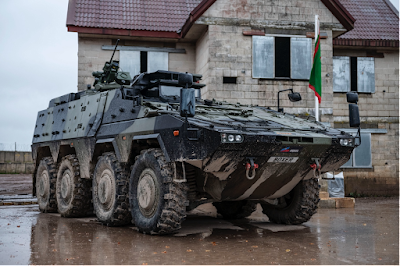
In early May, Rheinmetall published a periodical accounting report outlining potential deals that must legally be communicated, and it notably includes a 3rd Lot BOXER order for the UK, numbering c 400 vehicles. If this does indeed happen, it would push the UK purchase above the 1,000 threshold (523 in the 1st Lot ordered in late 2019; 2nd Lot of 100 added in April), and there’s a lot of good things that can be done with a thousand high end vehicles if you are laser-focused on maximizing combat capability.


My recommendation is always the same: Ambulance and Command Post and other supporting roles mostly do not need, or do not really benefit from being on a precious BOXER base. That is exactly what Multi Role Vehicle Protected should exist for. That’s how France, using Griffon alongside VBCI, and Italy using ORSO alongside FRECCIA, are maximizing the combat output of their 8x8 fleets.


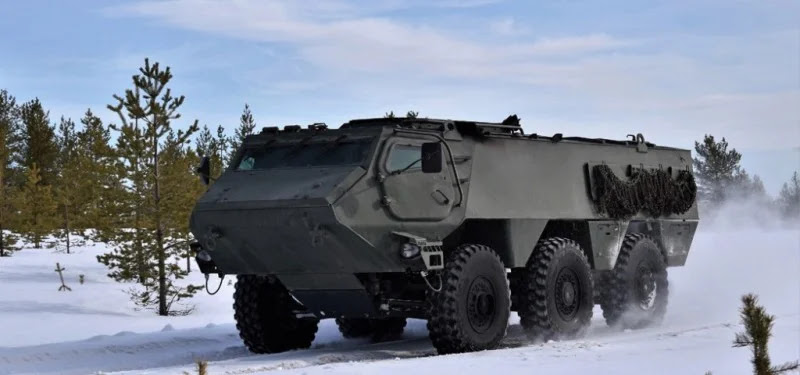
The Patria 6x6 is being adopted by Finland, Latvia, Estonia and Sweden as Common Armoured Vehicle System. It is an example of a good, cheap candidate to be the perfect supporting vehicle to BOXER in a multitude of roles. 

Ideally, I repeat, I would also forget about AJAX, if there really is the chance to claw back the money, and the Treasury is willing to let the MOD invest in advance. There is no overstating how helpful it would be to get more than 5 billion pounds to invest on programmes that are actually in step with the Army’s conditions.

Friday, February 25, 2022

An internal struggle?


In the last while I’ve been hard at work on a long article, destined to the leading Italian defence-themed publication, which tries to explain the intricacies of Future Soldier to a non UK audience.

It’s not an easy job, especially with how intricate some uselessly convoluted layers of command are, and because of the whole story of how Army 2020 and Army 2020 Refine came before.

Trying to explain this last decade plus of British Army turmoil has reinforced in me the belief that the British Army is fundamentally at war with itself. I can’t prove this conclusively from the outside, but the observation of these years has led me to believe that there are at least two factions (probably more) pulling the Army in different directions.

Purely for making my task easier, I will refer to the factions as “Traditionalists” and “Innovators”. I’m not exactly in a position to say which faction might be closer to the Truth, so neither term should be read as necessarily positive or negative.

What matters is that, from the outside, it is pretty much impossible for me to look at what happened to the British Army in these years without thinking that a radically different line of thought has gained the upper hand sometime between end 2014 and 2015.

The STRIKE Brigades, which I will immediately say i continue to think did not make real sense in the form imagined and described, were a major departure from the thinking that had generated Army 2020.

Army 2020 Refine turned the Army’s priorities on its head: in Army 2020 the Mechanized Infantry Vehicle was only supposed to arrive around 2029, to replace MASTIFF. It would have equipped a single infantry battalion within each armoured infantry brigade, serving much the same purpose of the german JAGERS. Germany uses its BOXERs, at least for now, precisely in that way: one JAGER battalion riding in BOXER APCs, serving as reinforcement for 2 battalions of PANZERGRENADIERS in PUMA IFVs.

Traditional. Well understood.

Behind the scenes, the “Innovators” came up with Conceptual Force 2035. I don’t know exactly when the study started, nor what its current status is: the British Army isn’t a transparent organisation. But the last time I heard officers explain the concept (in 2017), it called for the Army to be completely reorganized into Future Combat Teams described as “small, light and fast”, permanently combined arms in nature, built to the Rule of 4 (with Assault, Covering, Echelon and Reserve forces), flatter in hierarchy, with more distributed Command & Control and more Indirect and Precision Fires rather than “tanks”.


Conceptual Force 2035 summarized by the British Army Review


In greater detail, the Future Combat Team was ultimately described as a formation of around 500 people in total, but at least as capable as a more traditional, 1250-strong armoured battlegroup. It would have, indicatively, a single, 4-platoons infantry company, with an armoured Sqn in support, plus assault pioneers and integral Combat Service and Combat Service Support.

In order to perform in a comparable way to the larger, “traditional” BG, the Future Combat Team would add “around 90” robotic and autonomous vehicles (surface and air) to its “around” 50 vehicles.

The Future Combat Team would get its survivability more through dispersion and rapidity of action and movement than from physical armour. In order to push the enemy at a greater tempo and more in deep, the FCT would use robotic vehicles to “push reconnaissance to the point of destruction”. Greater Anti-Tank Guided Weapons coverage and greater availability of organic Fires were meant to ensure firepower without having to lug heavy and logistically-intensive MBTs around.

Future Combat Teams as imagined would be able to move “2000 km from a Surface Port of Debarkation (SPOD)” in order to get into battle and would be self-sustainable for at least 5-7 days of operations (transit included).

The Future Combat Team would have organic sensors and Fires to be able to “sense and engage” at ranges of at least 15 kilometers, and “understand” out to 30 km.

The Future Combat Teams would manoeuvre largely independently of each other, but would still be grouped into Brigade Combat Teams. The Brigade layer of command would have the purpose of ensuring Cyber and Electro Magnetic Effects (CEMA), ISTAR, Information Manoeuvre and “medium” artillery to support its FCTs with. Brigade Combat Teams would, on their part, also be independent in their operations, indeed fielding enough CS and CSS to operate for extended periods with little to no support from the parent Division, or to provide mutual support to other BCTs.

The Division’s role would mostly be to provide longer-range Fires and support (CEMA, ISTAR, IM etcetera).

Conceptual Force 2035 and the apparition of the STRIKE brigades were clearly connected. STRIKE was a first step moved in the direction imagined by the “Innovators”, although one that came with enormous risks attached and which, in my opinion, chose its priorities in the wrong order and with the wrong timing. 

STRIKE’s overwhelming priority was indisputably the purchase of a 8x8 MIV, at pretty much any cost to the rest of the Army. It completely turned the original Army 2020 on its head by bringing MIV forwards to 2023, leaping ahead of the modernisation of Armoured Cavalry (2025), MBTs (2025) and Armoured Infantry (2026). This not only put the fate of heavy armour in obvious jeopardy, but complicated an already complex budget situation and meant that the key improvements to the Artillery and other key enablers were left to live only on paper. Money simply wasn’t there to proceed with those projects which, with pretty much no exception, all date back to many years before Future Soldier.

That brings us to today, and to an army which is once again shrinking. The Armour has indeed suffered, as was to be expected: CHALLENGER 3 lives on, but WARRIOR has been sacrificed.

According to the NAO’s assessment of the post-Review Equipment Plan, however, a budget of 2.5 billion pounds will be made available in the next few years to uplift the BOXER purchase to at least around 750 vehicles. This means two things: the Army will actually be spending more money than it would have cost to update WARRIOR; and it will receive pretty much 1 BOXER for every lost WARRIOR (245 turreted vehicles were expected).

That tells to me that the loss of WARRIOR is more of a choice than a cut. The choice of an Army that made BOXER its number 1 priority all the way back in 2015 and which on rejoining the OCCAR BOXER team reserved for itself options for a total of 1.500 vehicles.

Maybe I’m getting into conspiracy theorist territory, but I think the faction of the “innovators” very much wanted things to go as they have. The sensation is that they firmly believe BOXER is the perfect vehicle for the Future Combat Team concept, and they are doing everything they can to secure its advent. If 2025 really comes with money to try and define an FV432 replacement with, expect more BOXERs to be ordered!

Future Soldier’s other winner is the Artillery, which sees money finally going its way. I honestly think not a single one of the artillery programs on the way are genuinely “new”. Almost all of them are only the latest evolution and name-change of projects that were already on the list back in 2010, if not earlier, under the unfortunate Indirect Fire Precision Attack mega-programme. The new Precision Strike Missile, for example, is literally the replacement of ATACMS, which the Royal Artillery has wanted for all this time and pursued, without success, with the Large Long Range Rocket programme. 

All that Future Soldier does is direct money their way.

And if you think about it, the upgrades to GMLRS, the Land Precision Strike requirement for a tactical missile reaching out to 60 – 80 km and, at a lower level, the Battlegroup Organic Anti-Armour project are key ingredients for the Future Combat Team vision.

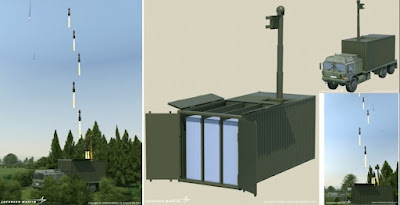
Speaking of the latter programme alone: the priority is the Mounted Close Combat Overwatch, a new capability that wants to threaten enemy armour at ranges of 10 and more kilometres and which includes concepts for container-based vertical launchers holding as many as 50 BRIMSTONE missiles. In an Army that has so far resisted, with ludicrous reasoning and incredible stubbornness, even the idea of putting a couple of ATGWs on the turret of IFVs or of AJAX!

Mounted Close Combat Overwatch is perfectly attuned with the Future Combat Team idea, just as BOXER is arguably well in tune with the kind of mobility and sustainability the new formations should have.


I don’t know if it is just my hope speaking, but if you look at Future Soldier through the lens of Conceptual Force 2035, you can actually see a thread of coherence in many choices, including the adoption of the Brigade Combat Team moniker and the narrative about greater all-arms integration at lower levels of command.

Looking through this particular lens, I’m tempted to say that Future Soldier is the result of a compromise between the faction of Tradition and the faction of Innovation: the equipment programme is in many ways shaped by the Innovators, but the structures, despite the appearance of the BCT title, remain very, very conservative. CHALLENGER 3 itself starts to look like a stopgap, a temporary and partial solution to the firepower requirement that in the long term, for the “Innovators” at least, probably includes no MBT at all. Or at least not an MBT in the shapes and weight classes we see today.

And AJAX... well, AJAX exists. Only because it was ordered before the “Innovators” could prevent it, if I have to guess, and because nobody has yet worked up the courage to cancel it because there is no certainty money would be available to replace it.

There is grandeur in this view of Future Soldier, to borrow a phrase from Charles Darwin. There is the comfort of thinking that the plan has not been written out of pure despair on the back of a paper napkin during a lunch in the mess at Andover. If one focuses purely on the structure of the “BCTs” and on the “Deep Recce Strike BCT”, that is the scene one is left imagining.

Looking at the equipment choices with Conceptual Force 2035 at hand, there seems instead to be an underlying logic, hidden under thick layers of compromise.


I don’t know if the Future Combat Team is the right solution to build a British Army that is relevant for the future despite its small sizes. I think the idea is bold and has many merits, and is, at least in theory, well suited for the UK. I don’t believe the lack of mass can ever truly be compensated, but it makes sense for a small army to be more “insurgent”, slippery and able to strike at long range. Even the most powerful countries in the world currently have little to no answer to long range missile strikes, so focusing on Fires is a way for a small army to inflict disproportionate pain to an adversary.

I think the “Innovators”, assuming they really exist in the way I imagine, have a good point. Not necessarily Truth, but a good proposal. Just yesterday, on Wavell Room, an interesting article was posted which certainly belongs in the “Innovator” field and that rhymes with Conceptual Force 2035 in many ways. It is part of the reason why I’ve decided to write this short piece.

Just as I’ve been and remain among the most ferocious and outspoken critics of the STRIKE brigades for the way the whole story was handled, I will say that I’m a supporter, in principle, of Conceptual Force 2035. And I’ve been for years, as my old articles prove. This might appear contradictory, but I don’t think it is.

If done right, focusing not just on the right capabilities but on the right distribution of them into permanent combined arms formations, CF2035 approaches could definitely ensure the British Army packs a heavy punch despite its diminutive frame.

The problem is that the Army has spent the decade stuck in a dangerous no man’s land between a “traditional” force and the “innovative” one. It is mutilating itself through its inability to take a definitive decision and stick to it. The violence with which the ship was turned in 2015 has ultimately resulted in the army becoming even smaller, and still Future Soldier fails to conclusively pick one side, with the result that it fields neither a decent, traditional heavy division nor an innovative, integrated, permanently combined-arms collection of agile “super-BGs”. If the Army doesn’t get out of the no man’s land quickly, it will end up grinding itself to pieces, Review after Review.

Imagine, if you will, an Army that had the maturity to pick one direction, and stick with it. The Armee de Terre did, and its SCORPION programme is the result. Is it a perfect system for all wars? No, but they are nonetheless in a situation orders of magnitude better than the British Army’s. And they haven’t burned billions with zero return.

Imagine, if you will, an Army that had selected its path before ordering AJAX, and had worked with coherence ever since...  Whatever the decision taken, it would be in far better shape today.


Sunday, October 10, 2021

Time for courage


The British Army is expected to reveal more details about its future plans sometime “in the autumn”, which in theory means sometime soon. The internal work to define the way forward is known as Project EMBANKMENT and is meant to put meat on the bones of the Future Soldier announcement that came together with the Defence Command Paper.

The Army’s Future Soldier position at the time was articulated as follows:


       An additional £3bn will be invested in new Army equipment over the next ten years on top of the £20bn already planned.

[NOTE: we have to assume it is part of this money that has been used to announce the GMLRS upgrade and new munitions, at 250 million, and the Mobile Fires Platform, replacement for AS90 and part of the L118s, at “over” 800 million. Both these projects already existed before, but clearly they didn’t have any funding line before the Review. The 120 million investment in the RANGER regiment, the planned 2023 purchases of new mini UAVs to replace Desert Hawk III and of new C-UAS weapons; plus plans for CAMM ER to beef up ground based air defence are probably all funded from this pot. “Over” 200 million have also been promised to beef up Electronic Warfare capabilities.]


       By 2025 the Army will be 72,500 regular and 30,100 reserve personnel.

       There will be no loss of cap badges and no redundancies of Regular soldiers.

       The Army will continue to recruit in large numbers the diverse talent that it needs to maintain a competitive advantage now and in the future.  

       1 MERCIAN and 2 MERCIAN will be merged.  In time they will form one of the new Boxer-mounted battalions in the new structure.

[NOTE: 1 MERCIAN was earlier planned to be a WARRIOR-mounted battalion. With WARRIOR going out of service and a lot of garage and barracks space, sometimes literally newly built, becoming available in Tidworth and Bulford, we have to assume earlier plans for BOXER battalions will be completely torn apart. There is little to no sense in putting BOXER in Catterick, as once planned, when Salisbury Plain is now “empty”.)


       A new Army Special Operations Brigade based around a new Ranger Regiment able to operate in high threat environments to train, advise and accompany partners.  This will be initially seeded from the current Specialised Infantry Battalions: 1 SCOTS, 2 PWRR, 2 LANCS and 4 RIFLES.


       A new Security Force Assistance Brigade to complement the Army Special Operations Brigade, operating in lower threat environments, routinely deployed across the globe to develop the capacity of partners and allies.

[NOTE: effectively this means turning another 4 battalions into Specialised Infantry. One of them will probably be 3 GURKHA RIFLES, which was being built up as 5th of the Specialised units when the new Army plan appeared]


       2 YORKS will become a new prototype warfighting and experimentation battalion. [This has now happened, with 2 YORKS, while based in Cyprus, busy testing new equipments including Dismounted Situational Awareness tablets; Robotic Platoon Vehicles and the new Assault Rifle In-line Low Light Sight, ARILLS]


Clipped on in front of the Day sight, the ARILLS "fuses" thermal imagery and image intensification for maximum performance at night and in all low light conditions. 

       The Infantry will be reorganised into four Divisions of Infantry with a more balanced number of battalions and offering a wider range of infantry roles. 

[Each infantry division will be aligned to one of the RANGER battalions and, presumably, one of the Specialised battalions as well. Each infantry division will probably get 1 mechanised battalion as well, so each division can offer a wide range of opportunities to new recruits]


       The Army will reorganise into Brigade Combat Teams (BCTs), including permanently assigned supporting elements like artillery, engineers, electronic warfare, cyber and UAS.  


Plans to upgrade GMLRS, reactivate some of the ones in reserve (44 launchers will be upgraded, compared to 35 now in use) and acquire new, long range and more advanced munitions is extremely welcome, but much of this was supposed to be funded already before the Review. 

       A very-high-readiness Global Response Force of 16 Air Assault Brigade and the newly formed 1st Aviation Brigade, which will be ready to respond from humanitarian relief through to crisis response and warfighting.

[The British armed forces have a formidable array of capabilities needed to build and sustain an excellent air mobile brigade: 8 C-17, 22 A-400M, 60 Chinook, 50 Apache helicopters, a new Medium Lift Helicopter to come, plus Wildcat. It’s a shame it took years to notice. The formation of the Aviation brigade was a much welcome step and further refinement of the combined capabilities of the two brigades would deliver a truly excellent tool. On the other hand, the loss of C-130J is regrettable, as it reduces the airlift capability. It’s very much contradictory to cut cargo aircraft while expanding the role of the air mobile force, but coherence in UK defence planning has never been a factor...]


       The Land Industrial Strategy will strengthen our partnerships with industry to unlock and rapidly exploit the potential of innovation and spiral development, delivering the kit we need when we need it, as part of the Army’s contribution to UK prosperity.


In terms of timelines, the Future Soldier briefing noted:


       The Army will use spring and early summer 2021 to refine and test the designs, capabilities and structure below BCT-level. It will plan carefully to maximise the potential of limited resources, particularly key equipment.

        This work will be presented to the Army Board in late June 21.

       The MOD Reserve Forces 30 review will be published in May 21. 

       Detailed programming and balanced decisions about the optimum resourcing and sequencing of this institutional change will follow, enabling CGS to issue orders to the Army in early autumn.


In terms of Force Structure, the Future Soldier plan as published at the time of the Defence Command Paper was as unimaginative as they come. The "new" Army linearly fell from a planned 4 mechanized brigades (2 armoured, 2 STRIKE) to just 2 mechanized Brigade Combat Teams, ugly and inevitable hybrids pieced together with the surviving pieces of Armoured Bdes (Challenger 3) and STRIKE (AJAX, which was originally meant for Armour anyway; and BOXER).

1 Cavalry regiment with AJAX, 1 tank regiment, 2 infantry battalions on BOXER. If this plan will be confirmed, it couldn’t possibly be any more foregone than it already is. You lose WARRIOR, you end up here. That's literally it. I was writing about it back in February

The only "innovation" at the time was the attempt to turn 1st Artillery Brigade into a 3rd manoeuvre bde by putting the 2 "orphaned" AJAX regiments into it, alongside GMLRS but without infantry. The Army calls this formation Deep Recce Strike Brigade Combat Team. This is not new per se, but it's new to see it as an organic, permanent formation: the Deep Strike Recce BCT is, really, the comfortable choice that lets the British Army hang on a couple of Cavalry regiments otherwise at risk, while adopting a familiar, reassuring mix that was used in Op GRANBY in 1991, grouping 16/5 Lancers with 32 and 39 Heavy regts RA as Divisional Artillery Group. What is old is new again.

The other 2 manoeuvre brigades were inevitably downgraded to Light BCTs, with the assumption that one would be Lightly Mechanized thanks to the use of FOXHOUND. Apparently, even in the middle of this disaster, the Army remains uninterested in hanging on to MASTIFF and RIDGEBACK, and we really should ask ourselves why, especially since these vehicles have received a quick, painless, cheap but important mobility upgrade and have been sent to Mali where they have an important role.


At a macro level, the new organization is purely born out of despair and can’t have taken more than 5 minutes to design. Literally.

Where innovation is supposed to happen is at lower level, and we have to hope that the Army will be bold enough to truly change its ways, and go back to the drawing board in regard to the organization of the brigades. 

The british BCT is described as a formation which


“will be structured to integrate capabilities at the lowest appropriate level with supporting capabilities routinely assigned including artillery, Un-crewed Aerial Systems, cyber, air defence, engineers, signals and logistic support. This will create more self-sufficient tactical units with the capacity to work with partners across government, allies and industry.”


The internal brief insists: “A Land force structured to integrate capabilities at the lowest appropriate level creating more self-sufficient points of presence”.


This is perfectly in tune with assumptions about the future that have been in Army thinking for several years now. The Integrated Operating Concept 2025 has notoriously listed the necessary attributes of the future force as:


Have smaller and faster capabilities to avoid detection

Trade reduced physical protection for increased mobility

Rely more heavily on low-observable and stealth technologies

Depend increasingly on electronic warfare and passive deception measures to gain and maintain information advantage

Include a mix of crewed, uncrewed and autonomous platforms

Be integrated into ever more sophisticated networks of systems through a combat cloud that makes best use of data

Have an open systems architecture that enables the rapid incorporation of new capability

Be markedly less dependent on fossil fuels

Employ non-line-of-sight fires to exploit the advantages we gain from information advantage

Emphasize the non-lethal disabling of enemy capabilities, thereby increasing the range of political and strategic options


The Army’s own Conceptual Force 2035 doubles down on the same kind of design drivers. This study imagined an army of 3 smaller but capable divisions made of lighter, faster, more deployable, largely independent battlegroups, with dispersion being the norm. Conceptual Force 2035 specifies that the disaggregated fighting requires Combined Arms capabilities to be organic at lower level, to ensure the dispersed Battlegroups do not have to wait for a superior echelon to make supports available. This includes having more organic Indirect Fire capability and employing it alongside greater ATGW capability to offset the capability currently delivered by MBTs through “lighter” vehicles.

The BGs will be expected to carry out, and I quote, deeper, more risky and aggressive manoeuvre. Robotic, sacrificial systems will be used to press on reconnaissance, and I quote again, to the point of destruction, in order to enable the BG to use frenetic op-tempo to make up for the lack of mass.

The resulting BGs would be around 500-strong but are supposed to match the current mission set of a 1250-strong armoured BG though the use of robotics and higher op-tempo. The Conceptual Force imagined that, from the then objective force of around 82.000 regulars, the British Army would be able to form some 48 such Combined Arms battlegroups. The organization would work to the Rule of 4, with an Assault Force, Covering Force, Echelon Force and Reserve Force. These BGs would be grouped in Brigades with enough CS and CSS elements to fight, again, largely independently from the Division level.


Conceptual Force 2035's key points


We can agree or disagree with the assumptions above, but there is no denying that, at a conceptual and doctrinal level, the scenario has been set. This is the future force that the Army thinks is needed in the future.

Now the real question is whether the Army has any appetite to reorganize its Force Structure accordingly, and let go of some old, deeply ingrained tribalism that has been allowed to put up all sorts of avoidable problems.

The examples that could be made when referring to that “tribalism” are many, at all levels, but my favourites  are always the same because they perfectly illustrate the avoidable stupidity that permeates the British Army’s structure.

First example: when “battlegrouping”, Cavalry / Tank squadrons or demi-squadrons are mixed with companies of infantry. A battlegroup based on an Infantry Battalion comes with the very significant advantage of having a Fire Support Company with mortars, snipers and anti-tank platoons. A BG based on a tank formation does not get a Fire Support Coy, because Tank regiments don’t have them. The AJAX regiments organized as “Medium Armour” formations, mirroring Tank regiments, would also not have had one. The cavalry regiments have anti-tank capability in their Guided Weapons Troop, but normally have no mortars. One of the “innovations” that the Household Cavalry Regiment was (is?) pursuing as part of STRIKE and of its transition to AJAX, is the creation of a mortar troop.

This, for me, is tribalism. That in this age of warfare we are still looking at these baby steps is insanity.

The use of UAVs is also very stovepiped, with 32 Regiment Royal Artillery holding the Mini-UAS capability and parcelling it out upon battlegrouping. This frankly won’t do in the future. Capability must spread out across formations and go down the ladder of formation size; combined arms must be the norm, not the on-deployment mixing of today.


If the Army is to move in any way closer to its own Concept Force 2035 ambition, it needs to find the courage to gut its current, increasingly nonsensical structure, mix Infantry & Cavalry and redistribute capabilities with no deference to capbadges and outdated Corps separations, creating Permanent Combined Arms Battlegroups.


Such a radical reform is no longer avoidable, since the Army is trying to modernize in the context of a regular manpower cap moving down from a theoretical, never-achieved 82,000 to 72,500 by 2025.

The regular Army is going to be smaller, and positions will be lost, and units will need to change. In particular, the Infantry is bound to take a hit, simply because Combat Support and Combat Service Support formations have already been cut back so much that most of the Army’s brigades are make-believe formations comprising only infantry, with no artillery, communications, engineering or logistics.

1st Division's brigades, with the exception of one which gets some supports on rotation, are next to useless paper bags containing infantry battalions to parcel out in the never ending quest to rob Peter so that Paul can be outfitted in a decent way for deployment.

This has to change. The Army will continue to drown in its own chaos otherwise.


While BOXER is an excellent base vehicle, it is not a complete, coherent capability unless the right mix of variants is achieved, and the equipment fit is decent. At the moment, the British Army's equipment fit plans are dismal, with, for example, the mortar carrier being literally just an APC carrying a L16 81mm mortar that will only be able to fire once dismounted. Same for the Observation Post Vehicle, which at the moment is not planned to be equipped with its own sensors and target marker to enable target designation from under armour. Key variants are missing entirely; others could now be a duplication (Engineer Section Vehicle and the ARGUS vehicle of the Ajax family seem to be in open conflict now that only 2 brigades remain), the number of infantry carriers is ridiculously small, firepower on the vehicles is absysmal. Change is urgently needed. 


As the reveal date for Embankment draws nearer, the leaks to the press have begun, with the Daily Mail writing about incoming reductions to the Infantry, which is said to be destined to shrink from 16,500 to 11,000. Apparently, the Rifles regiment didn’t take well to the news and promptly leaked the internal memo to the press. Either the leaker or, more likely, the Daily Mail itself, have also immediately felt the need to point out that the plan will be “overseen by the new Chief of the Defence Staff, Admiral Sir Tony Radakin. The evil Royal Navy is already out to get the Army’s scalp, seems to be the narrative that we will be force-fed over the coming months.

The fact that the Admiral is not yet in post, and that Embankment is the Army’s own plan formulated over the last several months is, naturally, a detail of no importance: never let facts get in the way of a good tale!


The reduction in the Infantry numbers is not and cannot possibly be a surprise to anyone who read the Defence Command Paper and Future Soldier brochure. Where did people think that the manpower reduction would hit? On the last few enablers left to ensure that the Army can scrape together 4 brigades somewhat deployable?

It was inevitably going to come to this.

And if the Army was to finally pursue its own imagined Future Combat Team, around 500 strong, it would again be inevitable that Infantry numbers would be further affected.

It was all always under our eyes.


The impact on the Infantry’s effectiveness is the only thing that isn’t yet clear. Some reductions will be pretty much automatic since mechanized battalions are larger than Light Role formations. As WARRIOR disappears and only 4 Mechanized battalions remain, a few hundred posts will disappear naturally. Several hundred more will vanish as 4 (or rather 3, assuming 3 GURKHA RIFLES carries on) battalions are cut down from 500/600 to 250-or so to form the new Security Force Assistance Brigade.

2 MERCIAN effectively disappears with the merging into 1 MERCIAN, accounting for several hundred more. And the rest will have to be shaved off with some other change to the structure of the remaining Battalions. 

Unfortunately the Army has once more tied its hands up by insisting that no capbadge will be lost and that no other battalions will disband, so this inexorably means every remaining battalion will get smaller.

How, and with what “capability compensation”, is the only question that remains on the table.


Army 2020, in 2011, attempted to absorb the manpower cut by removing a Platoon from every Rifle Company in every Light Role battalion. This proved unworkable, so a whole Company was removed instead, with the assumption that the hole would be filled by a formed company of reservists from the paired Reserve battalion.

This arrangement on paper makes a lot of sense in what is supposed to be a fully integrated force of Regulars and Reservists, but unfortunately proved unworkable because the availability of reservists is, understandably, not very good and not very predictable. 

The number of times the Reserve has been able to deploy a formed Company probably fits on the fingers of one hand. I can think of 4 PARA deploying one to the Falklands, and a case in Cyprus. 

Day to day efficiency of the regular battalions was badly impaired, as was their ability to train. It became normal to put together companies of two battalions to make one, which obviously defeats the point of keeping so many tiny battalions in the first place. 

Eventually, in 2015, the missing companies were rebuilt, redistributing the manpower obtained by inventing the Specialised Infantry battalions and downsizing them to just around 250 personnel.

But this time, manpower cannot just move around. It will be shed for good.

And there are just two ways in which this can happen:

-       The Stupid, Capbadge-driven way: insist in holding on to Infantry battalions more or less as they are, and go back to the (failed) Army 2020 model. This is unfortunately highly likely to happen, if recent Army history is any indication.

-       The Conceptual Force 2035 way: remove the artificial separations between Infantry, Cavalry, Armour, etcetera, and build up permanent, Combined Arms Battlegroups which will probably have the equivalent of just 2 Infantry companies, again, but will at least be designed from the ground up to include armour-support, UAVs, Robotic vehicles when they eventually happen, and beefed-up organic Fires. 


The most common counter-argument deployed against Permanent battlegrouping is that, supposedly, maintaining the separation of roles enables each component to pursue excellence in its field, and battlegrouping only for deployment safeguards “flexibility”.

Personally, I think this is an extraordinarily weak argument. It could be countered in all sorts of ways, but i once again will go back to the example made earlier: keeping the specialties separated results in incomplete battlegroups simply because, to make one example, the Cavalry absurdly does not have mortars.

The separation only enables and sometimes mandates the proliferation of capability gaps that require ever more “robbing Peter to pay Paul”: a stupefying number  of separate formations sending bits and pieces to one another to build something that actually works.


I don’t see a single genuinely good reason why we should continue to keep separate formations that will never deploy on operations without being broken apart and reassembled in combined arms battlegroups.

All too often, when looking back to operations, the post-action analysis contains the passage “the units in the battlegroup had only been together for a short time and didn’t know each other enough”, or similar remarks. Lieutenant M. Dewis, on TANK 2020 (volume 102, No 801) makes a series of recommendations to try and save the Regimental system while enabling the creation of effective Combined Arms Teams.

He stops short of advocating for permanent overarching formations, but he underlines the need for broader, more stable affiliations and more cross-training. At the same time he can’t help but note that Battlegroup level training is expensive and an increasingly rare commodity at a time in which it is more desperately needed than ever. It’s all good to insist on social networking and “forming and storming” by “intruding” in each other’s low level training events as much as possible, and simulation and tabletop wargames obviously help, but I don’t think half-measures are adequate. Certainly not in the context of a further shrinking Army.

The Army’s Conceptual Force 2035 is clear in its working assumption that the future is the combined arms Future Combat Team. It is time for the Army to move in that direction in a serious way, if it believes its own innovative thinking. There is absolutely no rational reason to claim that more self-sufficient formations wouldn’t be flexible and able to cooperate and re-ORBAT as necessary.


The Army insists that “the future battlefield will be different. It will be harder to hide and weapons will destroy with greater accuracy, range and precision. People will retain their centrality in the battle of wills, while robots and UAVs will increasingly reduce the number of people engaged in the front line. Legacy capabilities are becoming obsolete ever more rapidly”. 

To counter that, the Army says it needs faster, agile, well integrated, combined arms formations able to aggregate and disaggregate across a vast battlefield.

If this is the assumption, act on it.


The attributes of the Future Combat Team are the key to the whole concept: if you want to fight dispersed and be lighter but still capable, you must pack a serious punch and have far more capability pushed down the levels of command. This is something that in STRIKE was never done in any meaningful way. Firepower has been dead last in the list of priorities so far, and that made the whole thing not credible.

In fact, what is most striking about the Conceptual Force 2035 is that it is so entirely alien to what the British Army actually looks like today, in structure, “culture” and programmes. Permanent Combined Arms Battlegroups are anathema in today’s British Army and among the purists of capbadges and specialty separations. CS and CSS are a scarce resource completely out of balance with the number of infantry battalions. Indirect Fires and ATGWs are weaknesses, not strengths. The Rule of 4 is nowhere to be seen, and indeed resources in multiple areas are spread so thin than even the Rule of 3 is dubious, with infantry battalions that could literally shed a rifle company soon.


British Army armour leaving BATUS. The end of an era, happening largely behind curtains of shame-induced silence. 


Embankment is an opportunity for change. The reduction to regular manpower margins will be painful, there is no way to deny it will be. Trying to absorb the reduction while hanging on to 31 battalions will only make the pain worse and result in 31 ever more unusable formations.

It is time to be courageous, and end the tribalism and the excuses.


Change is desperately and urgently needed in equipment plans as well: AJAX and BOXER purchases as currently planned, in consequence of the disappearance of WARRIOR, no longer integrate each other. BOXER variants mix and equipment fit must change to lessen the devastating impact of losing WARRIOR. For a wider discussion about this aspect, see: http://ukarmedforcescommentary.blogspot.com/2021/06/the-good-bad-and-ugly-of-boxer-purchase.html

and

http://ukarmedforcescommentary.blogspot.com/2021/05/combined-arms-regiments-on-way-to.html


In the Global Response Force, investment is needed to ensure 16 Air Assault acquires organic vehicle mobility to complement the helicopter mobility. Light, Chinook-portable vehicles would enable the PARAs to manoeuvre quickly out of a landing zone, allowing the helicopter to drop troops off further away from a target and thus hopefully away from enemy air defences.

In terms of organisation, there is obvious scope for a greater integration of the all-important Chinook force into the Aviation Brigade. Since the Chinook is RAF-owned and operated, it is currently not an integral part of the brigade and, moreover, the Squadrons are not equipped with the same wealth of organic life support on the ground. At the moment, APACHE and Wildcat squadrons can operate on the battlefield in a way that Chinook cannot replicate, being more tied to well established airbases. This difference is unhelpful at best, and would need correcting.

There is also obvious scope for rationalising the current separated bits and pieces of ground support units: the current 7 REME, 132 Sqn Royal Logistic Corps, Tactical Supply Wing and Joint Helicopter Support Squadron could and should be re-organized to cut down duplication and maximize the number of complete task lines covering everything from ammunitioning, fueling, equipment maintenance and Landing Zone management.

It seems also obvious that 244 Signal Squadron, the one unit tasked with providing communications to the Joint Helicopter Command, really belongs organically into the Aviation Brigade.

They are not big changes, and in several cases they would probably generate efficiencies and savings, but they will require the cancellation of some redundant HQs and the removal of barriers between Army and RAF and between RLC, REME and Royal Signals.


The barrier between Royal Logistic Corps and REME might indeed be brought down more or less completely. There have been suggestions that the Army might be headed towards integrated Close Support Regiments, possibly including also the medical capability.

Defence already has one such integrated regiment, the Commando Logistic Regiment of 3 Commando Brigade, although this is admittedly a somewhat special case as the Royal Marines have the intimate support of ship-borne assets and stores. 

However, the STRIKE Brigades were also going to have a CSS battalion obtained by merging a RLC formation with a REME one. There’s a possibility that this integration will now become a target army-wide. There are resistances, but such integration is the norm in multiple allied armies, including the US, and it’s increasingly difficult to claim the British Army cannot adapt.


Change will also be needed in wider strategy and purpose as Forward Basing is finally embraced beyond the persistent presence of Specialised Infantry Companies.

Lieutenant General Chris Tickell, Deputy CGS, revealed at DSEI what the Army is doing to increase its responsiveness in key regions of the world. The BATUS training area in Canada has been quietly “robbed” of its large, permanent fleet of armoured vehicles, which have been brought back from February this year. Some 112 vehicles between Challenger tanks, AS90 guns, Warriors and “T2” (Titan bridgelayers and Trojan AVRE of the Royal Engineers) have been moved out and are heading towards Sennelager, in Germany, which will act both as the de-facto main training area for the mechanized force, and a Forward Base which will be better able to project heavy forces towards Eastern Europe.

The Omani-British Joint Training Area near Duqm, which we have been promised will be “tripled in size” with additional investment, will become the other main training ground for british mechanized forces. Units will deploy to Oman for “Khanjer Oman” exercises and will remain for a few months, rather than just for the duration of the exercise. In so doing, they will become a Forward Based force to complement the afloat Littoral Response Group (South) that the Royal Navy and Marines will base at Duqm from 2023.

The BATUK training area in Kenya, similarly, will see light / air assault battlegroups spending 2-3 months at a time in the area, rather than weeks as currently happen for the “Askari Storm” exercises.

BATUS, de facto, is no more. Although it is not closing down entirely, its era appears to have ended, and it would have deserved a more dignified goodbye, but the Army, MOD and Government presumably don’t like admitting that there just aren’t enough armoured vehicles left to sustain a training fleet based in Canada.

Training fleets in Sennelager and Oman can be realistically “double-hatted” as rapidly deployable, forward based forces. An armoured battlegroup stuck in the Canadian prairie cannot. At the end of the day, this is the one explanation for the move.


BATUS was notable for its absence in the graphics about Forward Presence. There was a reason for it, as has since become apparent. 

But given the premises, it is the right move, for once. I encourage the Army to insist on this path, and invest on it, and work closely together with the Royal Marines so that the Oman-based contingent is closely integrated with the LRG(S) and with its ships, that are the key element to enable the forward based force to move quickly across a theatre which is dominated by the sea.


What is still missing from the picture is an Army formation equipped and trained with the High North in mind. As the UK reinforces its strategic commitment to Norway and the wider Arctic, and makes the Littoral Response Group (North) one of the two main prongs of its international engagement strategy, there is obvious scope for the Army to provide a heavier force to back-up the afloat Royal Marines component.


It’s an obvious step to synchronize the Army with the Nation’s strategy.

But it will take courage.