SDSR
2015 – Issues, analysis and recommendations going towards the review
Budget
Army
Royal Air Force
Royal Navy
Beyond Harpoon and Storm Shadow (and Tomahawk too...?)
The Tomahawk problem
Not everyone has taken notice of the fact that Tomahawk was / is about to go out of production. The 2016 US Navy Budget request had a ZERO at the voice “Tomahawk”, with no new rounds to be procured. Eventually, Congress stepped in and added funding for a new TLAM purchase to keep the production line open a bit longer.
However, the expanded defence budget
crafted by Congress goes well above the amount of money that the Obama
administration wants to spend, and the president has vetoed it.
Eventually, days ago a bipartisan
agreement on spending limits for the next two financial years has been reached,
meaning that the worst scenario will be avoided… but also meaning that the 2016
defence budget is going back to the table for corrections meant to shave 5
billion dollars off the list. The unrequested TLAM production might or might
not survive the re-examination of the budget document.
TLAM might soon be out of production, and this consideration might have helped the Royal Navy in getting some funding to procure "additional Tomahawks", as mentioned in passing in the 10 Year Equipment Plan, 2015 edition. 65 TLAM rounds were requested in July 2014 and authorized by the US government, but there is news of only 20 having been effectively purchased, in september the same year.
If production ends, the Royal Navy
will then have to depend on its stock, which is unfortunately pretty limited
(it once consisted of 65 missiles, might be a few more now) and all composed of
encapsulated missiles meant for submarine, torpedo-tube launch.
No Vertical Launch rounds in stock
mean that, if production closes, the TLAM will NOT be an option for Type 26,
unless the RN is able to convince the US Navy to sell some of its stock (far
larger, numbering possibly up to 4000 rounds).
A major US (and UK participated) upgrade and refurbishment programme for TLAM is indeed about to start, but production of new rounds might be over soon. It will be, unless plans change in the next 2 financial years or so.
Under the current US Navy planning, recertification of existing TLAM rounds (and technology insertion) begins in 2019, using already existing TLAM stocks, with no new acquisitions.
Meanwhile, the Tomahawk successor, the Next Generation Land Attack Weapon (NGLAW) received a first 5 million funding line in 2015 with this motivation:
Funding is provided for a Next Generation Land Attack Weapon (NGLAW), a weapons system that is long range, survivable and can be launched from multiple surface and submarine platforms. NGLAW will incorporate evaluated existing and emergent technologies to support an improved strike capability with an Initial Operational Capability (IOC) no later than 2024.
This effort will enter the Analysis of Alternatives (AoA) phase of the acquisition cycle in FY15. Upon completion, the Department of the Navy will assess the results of the AoA and make a determination on a preferred material approach, the phase of the acquisition cycle the program will enter, and when the NGLAW weapon will achieve IOC.
"Amusingly" enough, by the time the Royal Navy chooses what to do with the MK41 on Type 26, the TLAM production line might be closed already, making Tomahawk actually a non viable solution.
There is the possibility that Congress will impede the US Navy’s attempt to terminate Tomahawk purchases exactly as it impedes the USAF from grounding the A-10 fleet. But it might also not happen.
There is the possibility that TLAM
will evolve and change face to become NGLAW and succeed to itself with a new,
advanced variant and with production restarting within a few years. But it
might also not happen.
The Royal Navy is involved in the
Tomahawk enterprise and in the recertification and upgrade programme, but is
unlikely to have much of a say in what happens with US Navy purchases and
successor plans.
The Royal Navy itself could keep the
TLAM production line open for an additional year if it purchased a significant
number of rounds (above 100), either in the submarine variant or VL variant, or
both. But this will require quick thinking and available money.
If indecision continues to win the
day, the Royal Navy risks to fall in the gap between the end of TLAM production
and the start of the production of the new US land attack missile, whatever it
ends up being.

A sizeable extension to the Royal
Navy’s stock of Tomahawk missiles is arguably a strategic priority regardless
of the Type 26’s armament decision. In fact, the TLAM is going to be in use for
at least 15 more years after the recertification. But while the US Navy can
live off a vast stock, consuming it over time and filling the holes with the
new Land Attack weapon when it enters in production, the Royal Navy can’t live
long on the current stock. 60 – 100 missiles can be fired very, very quickly if
a major operation, or several small ones, take place in the next few years.
Basic prudence suggests that a
significant expansion of the stock is indispensable to make sure that the RN
doesn’t run out of one of its most important and most often used weapons years
before a replacement is available.
A decision will also be needed for
shaping the post-Tomahawk era.
Tomahawk developments
One
major capability development for TLAM Is the cooperatively funded US Navy/United Kingdom Joint Multi-Effects Warhead
System (JMEWS) / Joint Capability Technology Demonstration (JCTD). The JMEWS
introduces much greater capability against Hard and Buried targets, while
retaining the same blast-fragmentation effects already available. This new
multi-effect warhead, first demonstrated in 2010 with perforation of a target
protected by reinforced concrete, would greatly expand the range of targets
that TLAM can effectively destroy.
Other enhancements in
development include multiple or multi-band antennas, an integrated single box
solution radio and Third-Party In-Flight Targeting (3PT). These changes
enable the Tomahawk to fly attack profiles that increase its chances of
surviving against complex air defence systems; allow the missile to send
imagery back to base and permit the missile to loiter and be re-targeted in
flight.
Experiments stateside have included TLAM retargeting
from an F-22 Raptor in flight, providing a glimpse of the possibilities that
would be opened by F-35s working with TLAMs as “wingmen”.
JMEWS and these enhancements are almost certainly
going to be part of TLAM’s future, ensuring it remains relevant for another 15
years after 2019.
Separately, Raytheon is continuing to work on the
Multi Mission Tomahawk concept, which introduces an active
radar seeker (in addition to the existing guidance system) to
enable much expanded moving target (and anti-ship) capability. The RF seeker is
another element that could be included in the 2019 refurbishment and
recertification programme. Raytheon hopes to win the US Navy’s interest (and
funding), and is effectively pitching the Tomahawk MMT against LRASM and JSM
for the US Navy’s Offensive Anti-Surface Warfare (OASuW) Increment 2
requirement. Lockheed Martin's LRASM for now has only been selected for OASuW
Increment 1, which is an urgent programme for adding improved, modern anti-ship
capability on U.S. Navy F/A-18E/F Super Hornets and U.S. Air Force B-1B Lancer
bombers.
Increment 2 will address the requirements for an
advanced, autonomous, anti-ship missile capable of being launched from the air,
surface and sub-surface, and the solution for the requirement has yet to be
selected.
The Future Cruise & Anti-Ship Weapon
The FCASW has been on the list of
potential joint UK-FR projects since the Lancaster House agreement. It is a
programme name that has been around for a while, but that has made virtually no
progress since. Its long-term aim is to replace Harpoon, Exocet and Storm
Shadow / Scalp.
Replacing Tomahawk and Scalp Navale
is going to be more a problem, because of the strike range: the 2000 +
kilometers range of TLAM is what makes it truly a strategic weapon, and any
downgrade to that reach reduces the number of targets that can be reached far
inland from launch zones out at sea. FCASW might or might not attempt to generate
the same kind of strike radius: it will most likely depend on early decisions
that hinge on how to sustain and then replace the TLAM capability. If the UK
decides to follow the US efforts in that area, then Tomahawk replacement will
not figure among FCASW requirements.
Jane's is reporting that there should be a first phase
of joint concept studies starting next year, and a technology demonstrator in
2019 if we are lucky. Assuming that the british SDSR goes the go ahead and
confirms the funding, things should start moving.
When FCASW is mentioned, the
temptation is to think of the MBDA Perseus concept weapon, but while the
Perseus is pretty likely to be considered as part of the exercise, the concept
coming out of the study could actually end up being much, much different.
The CvS401 Perseus was MBDA’s Concept Weapon for the
year 2011, and it clearly was inspired by the FCASW requirement: it was
presented as a cruise missile capable of extremely high speed (up to Mach 3)
and a range of 250 – 300 km. It was shown with a “triple” warhead consisting of
a main explosive charge (around 200 kg) within the missile and two small (40 –
50 kg) inertial-guided, droppable “effectors” that could be used to strike a
ship in multiple places with the same weapon; to hit multiple targets in the
same area or simply to act as a large unitary warhead when necessary.
The missile would be able to cruise
and attack from high altitude or to sea skim for maximum effect against enemy warships,
and it would come with a multi-sensor seeker combining AESA radar, LIDAR and
semi-active laser guidance.
It would be a multi-platform weapon,
compatible with ships (MK41 and Sylver A70); submarines (standard 533mm torpedo
tubes); aircraft and land-based launchers.
The Perseus was clearly aimed at the
UK-Fr requirement, but it remains a concept which has not left the CGIs yet,
and calling the Future Cruise and Anti Ship Missile "Perseus" and
expecting it to have the same kind of characteristics is a wild guess. Perseus
promises a lot from an 800 kg weapon, and it looks like a complex and expensive
system. Some of its features might not be part of the actual weapon emerging
from the joint programme (assuming it does eventually emerge).
Perseus’s 300 km range also makes it
way too short legged to ever be considered a fitting replacement of Tomahawk
and Scalp Navale.
 |
| Perseus shown while ejecting its two sub-munitions. |
The FCASW concept phase will have to
answer to a number of questions about range, warhead, seeker and intended
strategy for penetrating inside highly defended bubbles of airspace. The Mach 3
speed of Perseus is particularly suited for anti-ship attack, as a
sea-skimming, highly supersonic weapon leaves the targeted ship with a tiny
timeframe available for attempting to shoot down or decoy the missile off
target.
On the other hand, a high supersonic
missile inexorably loses out part of its stealthness, as speed means heat (and
higher IR signature) and also requires an optimization of the aerodynamics
design that precludes obtaining the lowest radar cross section.
More speed and less stealth, or the
other way around? LRASM settled for stealthness. FCASW might go in another
direction.
But if speed is chosen, Mach 3 might
be a rather modest target: while in the West supersonic anti-ship missiles
haven’t had much space so far, in Russia and in Asia several supersonic weapons
already exist. The Mach 3 Russia-India BramHos missile is already operational,
and research is already moving on towards the hypersonic real, with speeds of
Mach 5 and higher.
FCASW would risk to achieve high
supersonic speed when the rest of the world achieves hypersonic speed,
perpetuating the missile disadvantage.
Another problem with Perseus /FCASW is that the date being suggested for ISD back in 2011 was 2030.
2030 might be acceptable for the RAF
and Armee de l’Air and even for the Marine Nationale, since the first two can
life-extend Storm Shadow / Scalp and the second is just now putting into
service the latest block evolution of the Exocet and the new Scalp Navale
cruise missile.
The Royal Navy has more urgent
needs, considering that it still uses the ancient Harpoon Block 1C (with a 2018
OSD and an uncertain future); is faced by the possibility that TLAM production
will end within two years and is planning to put in service a new frigate type
beginning in 2022 that comes with 24 MK41 cells but not with a clear plan to
achieve an anti-ship and land attack capability.
The urgent needs of the navy and the
uncertainties of UK-Fr cooperation (Telemos is still fresh in the memory) bring
forth painful questions about what to do. The FCASW concept of a single weapon
able to do it all is fascinating and comes with the plus of keeping british
industrial capabilities alive.
On the other hand, the US solution
to both the Tomahawk and anti-ship problems will likely be ready earlier and,
due to the large US purchases, might come cheaper and with a production line
open for many years.
Two programmes might be needed: a
collaboration with the US on the post-Tomahawk; and the FCASW for the
post-Harpoon and post-Storm Shadow.
The Harpoon problem
Aside from money, one problem with
replacing Harpoon is the different design philosophies followed by the vessels
of the fleet. The Type 23 cannot be equipped with a vertical-launch anti-ship
missile, but is not going to be completely out of service before 2036.
The Type 45 could move on from
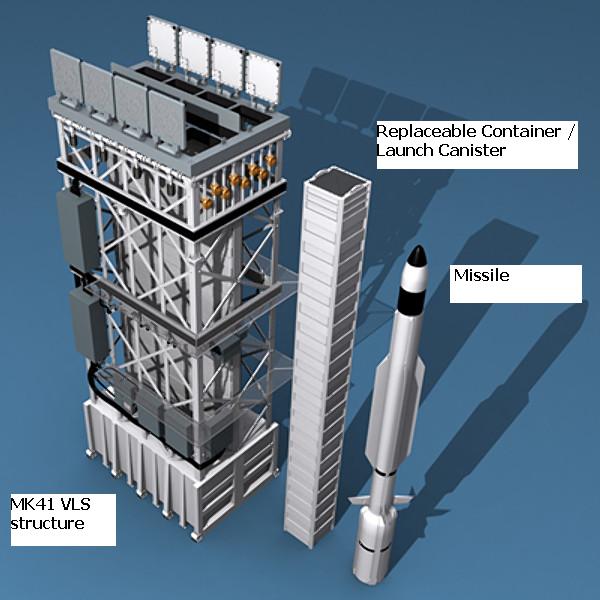
Harpoon to a VL system, but only if the space reservation was used and two MK41
Strike Length modules (with a total of 16 cells) were slotted in. This might at some point happen when
Ballistic Missile Defense becomes not a “nice to have” but a “must have”. As
detailed in the previous article, the Royal Navy has already been putting work
into BMD software for the Type 45 and has also funded a study into the addition
of the MK41 modules and the integration of the SM-3 anti-ballistic missile.
In the meanwhile, four of the Type
45s are (slowly) being retrofitted with Harpoon, using the launchers and
missiles taken from the decommissioned Type 22 Batch 3 ships. As of today, HMS
Duncan and HMS Diamond have received their fit.
It is possible, but not certain)
that all six Type 45s will receive the computers and wiring back-end that make
Harpoon work, allowing the rapid transfer of the launcher blocks from one to
the other.
The incoming Type 26, on the other
hand, does not seem to have provisions to ever embark a missile unless it is
vertically launched from the 24 MK41 cells.
Today, there are many western
anti-ship missiles that are fired from above-deck tubes, but there is very
little choice in terms of vertical launch ASMs. This is going to change, at
least in part, due to the renewed US Navy interest for anti-ship missiles.
The US LRASM is thus taking shape, and Norway intends to have a go at
the US opportunity by developing its Joint Strike Missile for vertical and torpedo tube
launch. The JSM will also be integrated for internal and external carriage on
the F-35A and, if selected by the US Navy, could go on the F-35C as well. On
the F-35B, internal carriage is not possible as the bays are 14 inches shorter,
but external carry is an option. The FCASW will also be required to be
compatible with vertical launch.
It is reasonable to assume that over
the next decade or so, the availability of VL missiles will increase, while
over-deck tubes will fall progressively out of fashion.
The problem, however, remains: it is
hard to imagine the Royal Navy funding two anti-ship missiles at once (it is
already hard enough to see it finding the money for one), so the option is
arming the Type 26 and disarming Type 23s and, at least for a while, the 45s;
or leaving the Type 26 itself without an anti-ship missile.
Given the obsolescence of the
Harpoon and its single-mission nature, it would seem logic to procure a more
capable and dual-role missile for use on the Type 26 and, subsequently, Type
45, even if it means accepting the loss of ASMs on the Type 23 while they have
still more than a decade of service ahead of them.
But if FCASW continues to aim for
the distant 2030, the Royal Navy will have to consider a big Harpoon life-extension,
or an interim ASM solution with an off-the-shelf missile, or deal with well over
a decade of nothing.
Storm Shadow Mid Life Upgrade
France has confirmed in its
Financial Law for 2016 that the defence budget will include money to start the
Scalp mid life upgrade. Originally, this was to be another joint programme,
with the RAF interested in life-extending its Storm Shadow missiles, close
“relatives” of the French Scalp. It is possible to find news of joint studies
and technology developments dating back to 2004 if not earlier. Finally, for
France at least, the actual upgrade might be about to start.
Requirements and aspirations voiced
in the past years included a two-way data link for in-flight retargeting and a
different seeker. At one point, the DUMAS (Dual Mode Active IR and Imaging IR
Seeker), result of a joint UK – FR technology demonstration programme, was
expected to be part of the MLU. DUMAS combined an active infrared scanning
laser and a passive infrared detector which, used in conjunction with
sophisticated algorithms, provided detection, imaging and accurate identification.

No information is coming out from
the MOD at the moment, but it is pretty likely that the RAF will still want to
exploit the chance to share the costs involved in life-extending Storm Shadow.
Despite writing off more than 200 million in Storm Shadow holdings after the 2010 review, reportedly. Which might mean having reduced the stock by 200 missiles or so...